Skip to content


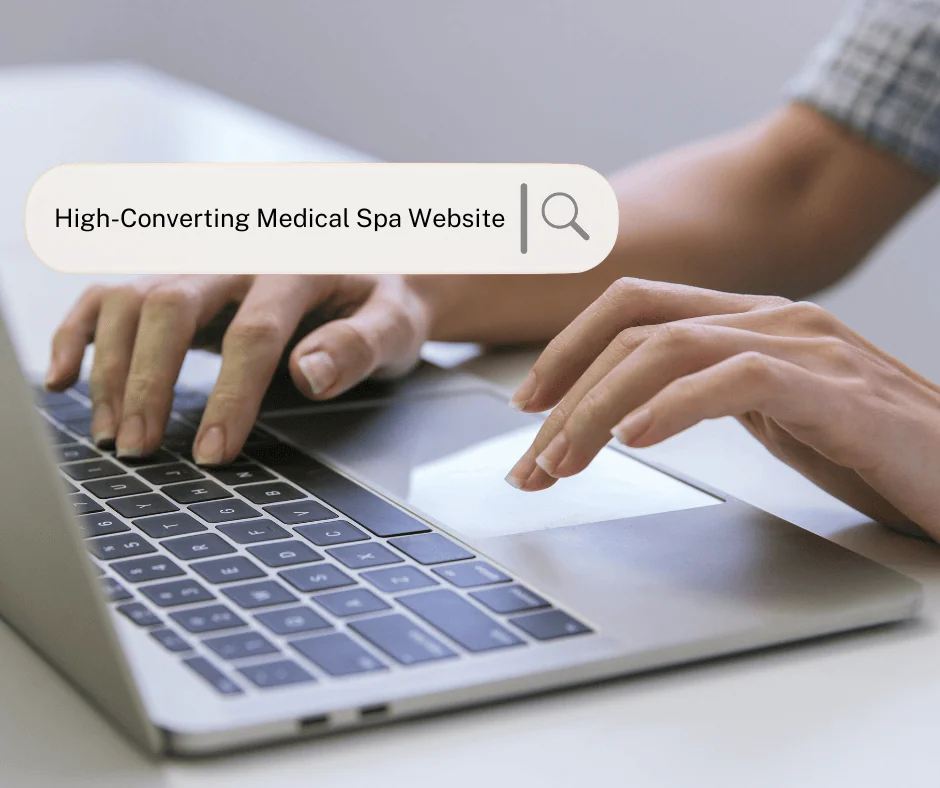
Building a high-converting med spa website doesn’t happen with a single click. If anything, it requires a level of expertise and effort that many med spa owners, practice managers, and marketers underestimate. It’s exactly why we’ve pulled together all of the information you need to create a high-converting med spa website.
Why does my med spa need a good website?
Your med spa website is your most powerful patient acquisition tool, functioning as a 24/7 patient acquisition system rather than just a digital brochure. With 72% of patients researching providers online before booking, your website’s ability to convert visitors into patients directly impacts your practice’s growth. A well-optimized site builds trust, educates potential patients, and guides them toward booking—all without requiring staff time.
Understanding Website Conversion Optimization for Medical Spas
How should I set up the navigation on my med spa website?
Effective website navigation guides visitors on a clear journey through your offerings, reducing frustration and increasing engagement. The essential elements are clear, logically organized treatment categories, an intuitive menu structure that feels natural, prominent booking buttons visible on every page, easy access to key information such as pricing and contact details, and a mobile-friendly design that works across all devices. Poor navigation causes visitors to leave. Optimized navigation keeps them engaged and moving toward booking.
What pages do I need on my med spa website?
Every med spa website needs at least six essential pages to highlight your practice’s value effectively. Your home page should feature a clear value proposition and easy navigation. Individual treatment pages provide detailed information about each service. About and team profile pages humanize your practice by putting faces to names and establishing credentials. A before-and-after gallery showcases real patient results as social proof. Your contact and booking page must be mobile-friendly with multiple contact options. Finally, pricing and financing information provides the transparency patients expect and reduces friction in the decision-making process.
What’s above-the-fold content and why should I care?
Above-the-fold content is everything visible on a webpage before scrolling. It’s the first impression that determines whether patients stay or leave. Take RUMA Medical‘s website, for example.

This prime real estate needs a compelling headline that addresses patient needs, a clear primary call-to-action, trust indicators such as certifications and review ratings, and a high-quality hero image or video. The design must be mobile-responsive since most visitors arrive on phones. You have roughly three seconds to convince someone to keep scrolling, so every element above the fold should earn its place.
Where should I put buttons and calls-to-action on my site?
An effective CTA strategy guides patients through their decision-making journey by providing multiple convenient ways to take the next step. Place primary booking CTAs in prominent positions, such as the header and above the fold. Add secondary CTAs for consultation requests throughout content sections.

On mobile, use a floating booking button that stays visible while scrolling. Include click-to-call functionality for patients who prefer phone contact and integrate online chat for those who want real-time answers before committing. The goal is to remove friction. Whatever action a patient is ready to take, make it immediately accessible.
What features help turn website visitors into booked patients?
Your website must actively facilitate conversion, not just provide information. The essential tools are a real-time scheduling system that lets patients book immediately without phone calls, a chatbot that provides 24/7 support for questions outside business hours, virtual consultation booking for remote assessments, and secure payment processing for deposits or prepayment. These tools capture patient interest at the moment of decision, rather than forcing them to wait and risk losing motivation.
How do I keep visitors engaged on my med spa site?
Patient engagement features help visitors envision their results and build confidence in choosing your practice. Treatment visualization tools show potential outcomes using uploaded photos or sliders. Interactive self-assessment quizzes help patients identify which treatments suit their concerns while capturing lead information. Before-and-after galleries with real results provide powerful social proof.

Video testimonials let satisfied patients tell their stories in their own words, which feels more authentic than written reviews. Virtual practice tours reduce anxiety by showing patients the environment before they visit.
What kind of content should I put on my med spa website?
Content builds patient trust and guides informed decision-making, serving as the foundation of your conversion strategy. Treatment explanation videos educate patients while showcasing your expertise and personality. Patient success stories provide relatable social proof that helps prospects see themselves in similar situations. Procedure FAQs address the specific concerns and objections that prevent booking. Provider credentials establish expertise and justify premium pricing. Educational blog posts demonstrate authority on aesthetic topics while improving search visibility. The best content answers the questions patients are already asking themselves.
What photos and videos should be on my med spa site?
Visual content makes your results tangible and your practice feel real. Professional before-and-after photos show actual outcomes and set realistic expectations—these are often the most-viewed pages on med spa sites. Treatment demonstration videos explain what patients can expect during procedures, reducing anxiety. Team and facility photos humanize your practice and help patients feel familiar with your space before visiting. Infographics simplify complex procedures into digestible visuals. Virtual tour videos let prospects explore your environment, which is especially valuable for patients who feel nervous about clinical settings.
My website is slow. How do I speed it up?
Website speed directly impacts both user experience and search rankings. Every second of delay increases bounce rates. Optimization requires image compression to reduce file sizes without sacrificing quality, caching to speed page load times for returning visitors, code minification to streamline what browsers must process, server response time optimization through quality hosting, and specific mobile performance enhancements since cellular connections are slower. A site that loads in under three seconds retains significantly more visitors than one that takes five or more seconds.
How do I make my med spa website look trustworthy and secure?
Security and trust elements reassure patients that your practice is legitimate and their information is safe. SSL certification (indicated by HTTPS and the padlock icon) is now expected. Sites without it appear as “not secure” in browsers. HIPAA compliance indicators signal that you take healthcare privacy seriously. Secure payment processing protects financial transactions. A clear privacy policy explains how you handle patient data, which matters more as privacy awareness grows. Terms of service provide legal transparency. These elements may seem administrative, but their absence raises red flags for cautious patients.
How do I know if my med spa website is actually working?
Tracking the right metrics reveals what’s working and where you’re losing potential patients. Conversion rate by traffic source shows which marketing channels deliver patients who actually book, not just visitors. Average time on site indicates whether your content engages people or drives them away. Bounce rate measures visitors who leave without taking any action. High bounce rates signal a mismatch between expectations and content. Comparing mobile versus desktop performance often reveals that mobile users convert worse, pointing to optimization opportunities. Cost per lead ties marketing spend to actual results, helping you allocate budget effectively.
How do I test and improve my website over time?
Continuous improvement separates high-performing websites from stagnant ones. A/B testing compares variations of key elements like headlines, CTAs, and images to see which version converts better. Heat mapping analysis shows where users actually click, scroll, and hover, often revealing surprising patterns. User behavior tracking follows navigation paths to understand how people move through your site. Conversion path analysis identifies where potential patients drop off in the booking process. Exit intent monitoring detects when users are about to leave, creating opportunities to capture them with targeted offers. Test one element at a time and let data guide decisions rather than assumptions.
How do I make my med spa site work better on phones?
The majority of med spa service searches now happen on mobile devices, making mobile optimization essential rather than optional. Design for touch with navigation elements and buttons sized for fingers, not mouse cursors. Optimize images to load quickly on cellular connections. Simplify forms by reducing fields to the absolute minimum—every additional field decreases completion rates on mobile. Make phone numbers tap-to-call buttons. Size CTAs for thumb reach, typically in the lower portion of the screen. Use typography large enough to read without zooming. Streamline content since mobile users scan rather than read in depth. Test your site on actual phones, not just browser simulators.
How do I get my med spa to show up in local searches?
Local visibility is crucial because medical spa patients almost always choose providers in their geographic area. Start with Google Business Profile optimization. Complete every field, add photos regularly, respond to reviews, and keep hours accurate. Target local keywords by naturally including your city and neighborhood names in your content. Create location-based content that addresses the specific needs and concerns of your community. Manage directory listings to ensure consistent name, address, and phone information across all listings. Integrate reviews prominently since they influence both search rankings and patient decisions.
How do I capture leads from people who aren’t ready to book yet?
Attracting traffic means nothing if you can’t capture contact information from visitors who aren’t ready to book immediately. Place forms strategically on high-intent pages like treatment pages and pricing information. Use progressive profiling to gather information gradually rather than asking for everything upfront, which reduces abandonment. Offer lead magnets like free consultation guides, treatment comparison charts, or exclusive discounts in exchange for email addresses. Deploy exit intent popups that appear when users move to close the tab, offering one last reason to stay connected. Set up automated follow-up sequences so no lead falls through the cracks while your staff handles other priorities.
What emails should I send to leads who haven’t booked?
Most patients don’t book on their first website visit—nurture sequences keep your practice top of mind until they’re ready. Start with a welcome email series that introduces your practice personality, highlights key differentiators, and sets expectations for future communication. Deliver educational content that addresses common concerns and questions about treatments they’ve shown interest in. Send appointment reminders that reduce no-shows and demonstrate professionalism. Share special offer notifications strategically to create urgency without training patients to always wait for discounts. Request reviews after appointments to build social proof while the positive experience is fresh.
What new tech should I be thinking about for my med spa website?
Staying ahead of technology changes keeps your practice competitive as patient expectations evolve. AI chatbot integration provides sophisticated automated engagement that handles complex questions and qualifies leads around the clock. Virtual consultation tools enable remote assessments, expanding your reach beyond patients who can visit in person. Augmented reality treatment previews let patients visualize potential results on their own photos, dramatically increasing engagement. Voice search optimization matters as more people use Siri, Alexa, and Google Assistant to find services. Progressive web app features make your website feel like a native app with offline capability and push notifications.
Do I need to keep updating my website or is it a one-time thing?
Website optimization is an ongoing process, not a one-time project. Patient expectations shift as they experience better websites elsewhere. Search algorithms update regularly, changing what ranks well. Competitors improve their sites, raising the bar in your market. Technology evolves, creating new engagement possibilities. Regular monitoring reveals performance changes before they become problems. Continuous testing identifies incremental improvements that compound over time. Periodic updates keep content fresh and accurate. The practices that treat their website as a living asset consistently outperform those that build once and forget.