Skip to content


Med spa marketing fails between strategy and execution. Hear from Growth99 CEO Rob Pickell on what separates growing vs. stuck practices.
| Quick Answer: Med spas close the gap between marketing strategy and execution by treating marketing as infrastructure rather than a variable expense. They focus on running a consistent engine focused on one high-value patient segment, fixing the conversion layer between lead and revenue before spending more at the top of the funnel, and using AI to amplify authentic expertise rather than replace it. The practices growing past $2M in revenue have built this engine. The practices stuck under $1M usually have a strategy on paper but no operating rhythm underneath it. |
Key Takeaways
- The real gap is execution, not strategy. Most practices know what to do; growth stalls in the daily habit of doing it.
- Marketing is infrastructure, not a faucet. Practices that budget for it like rent compound growth. Practices that budget for it like discretionary spend chase it.
- Fix the conversion layer before increasing spend. More leads into a leaky bucket costs more without producing more.
- AI amplifies expertise; it doesn’t replace it. Generic AI content saturates the market. Authentic, specific content wins.
- Your authentic voice is now your competitive edge. In a market flooded with polished AI content, specificity beats polish.
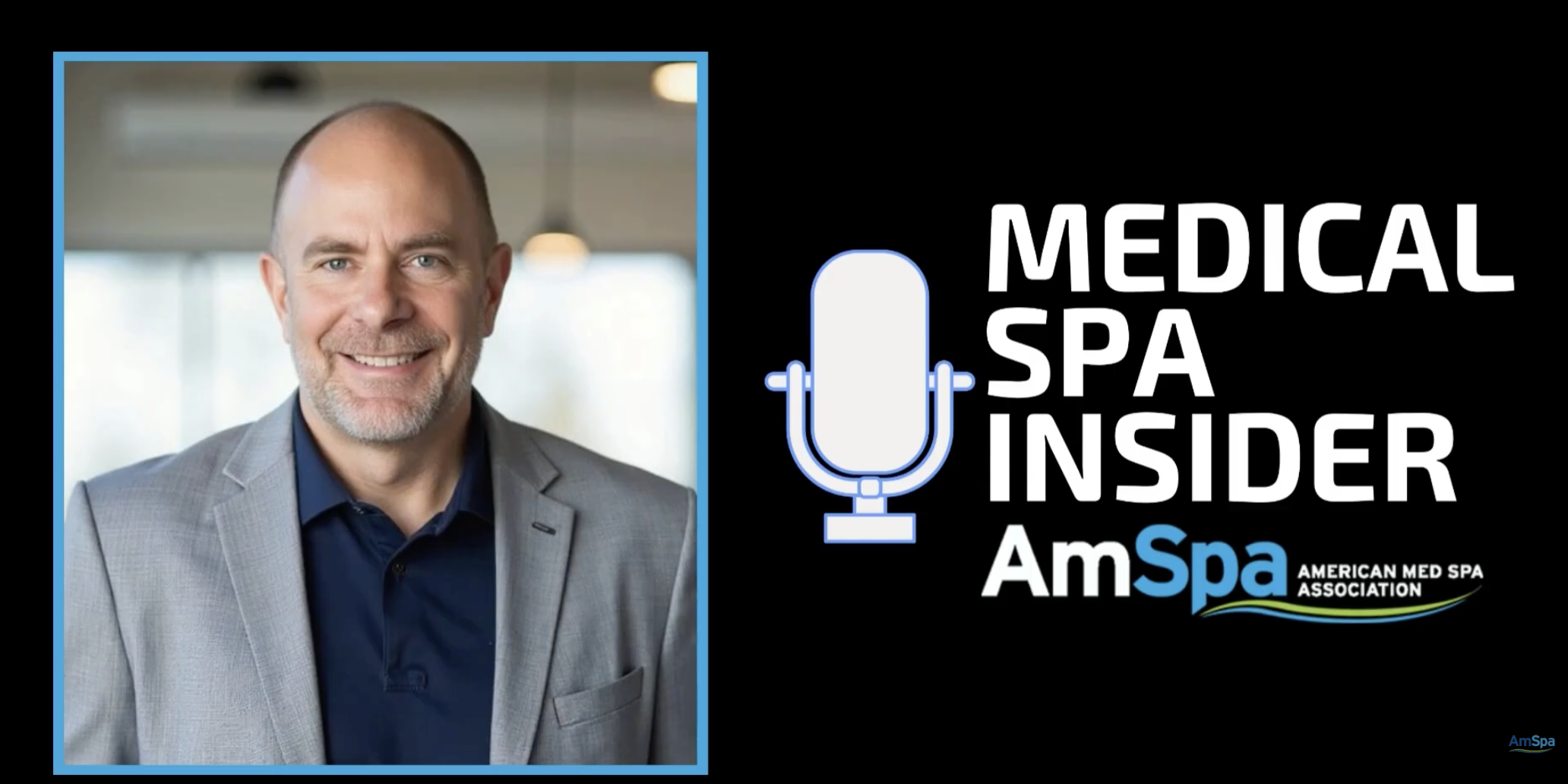
That gap between a marketing strategy and a marketing engine was the throughline of a conversation between Growth99 CEO Rob Pickell and Alex Thiersch, founder of the American Med Spa Association, on the Medical Spa Insider podcast. The two sat down to talk about where aesthetic medicine is headed, what’s separating the practices that are growing from the ones that are stuck, and how AI is changing the med spa marketing landscape. The conclusion was simple, and a little uncomfortable.
Strategy is knowing what to do. Execution is the consistent daily habit of doing it. Most practices have the first. The second is where growth gets stuck.
Here’s what that looks like in practice, and what to do about it.
What’s Actually Breaking in Med Spa Marketing Right Now?
The gap most med spa owners can’t see is between having a marketing plan and running a marketing engine. And the practices growing past $2M in revenue have built the engine, while the practices stuck under $1M usually haven’t.
Aesthetic medicine is consolidating. There’s a growing dividing line between practices that have crossed the $2 million revenue mark and the larger cohort sitting under $1 million, where growth has become noticeably harder than it used to be.
What separates the two isn’t access to a flashier tactic. It’s that the growing practices have built a methodical marketing engine focused on their highest-value patient segments, while the stuck practices are doing a little bit of everything without a clear sense of what’s working.
That gap, between knowing what good marketing looks like and actually doing it consistently, is where most med spa marketing efforts come apart. It’s almost always one of three things underperforming relative to the others: content production, distribution, or the conversion layer underneath. Practices spend time and money on whichever feels broken in the moment and ignore the other two.
Takeaway: If your marketing plan and your marketing activity would look identical to an outside observer, you likely have an execution gap, not a strategy gap.
Why Treat Med Spa Marketing as Infrastructure, Not an Expense?
Med spa marketing should be treated as infrastructure (a system that runs continuously) because inconsistent marketing produces inconsistent growth, and the feast-and-famine cycle of variable-cost marketing almost guarantees the practice never compounds.
Most owners treat marketing as a variable cost. You spend when things are slow, you pull back when things are good, you stop entirely when budgets get tight.
The result is a feast-and-famine cycle that almost guarantees inconsistent growth.
Compare that to how the same owner would approach a clinical treatment. You wouldn’t tell a patient on a Botox maintenance schedule that you’ll dose them when business feels good. The treatment requires consistency to work. The same logic applies to marketing. It’s infrastructure that needs to run continuously to deliver results, not a faucet you turn on when you’re nervous about the schedule.
Practices that internalize this shift, and budget for med spa marketing the way they budget for rent, staff, or supplies, tend to compound their growth rather than chase it.
Takeaway: A marketing budget that flexes with how business feels this month is a symptom of treating marketing as an expense instead of infrastructure.
Where Does Med Spa Lead Generation Actually Break Down?
Med spa lead generation most often breaks down at the response-time gap between inquiry and follow-up, and at the consultation-to-treatment conversion, not at the top of the funnel. Practices lose more revenue to slow response and weak consult close rates than they do to low lead volume, which is why increasing ad spend before fixing the conversion layer usually makes the problem worse, not better.
Most owners look at top-of-funnel performance when they want to evaluate their marketing. How many leads came in this month? How much did we spend?
That’s the wrong place to look first.
The more revealing question is what’s happening at every conversion stage between lead and revenue. How many of your leads are becoming consultations? How many consultations are becoming patients? How many first-time patients are becoming repeat patients?
If any one of those rates is underperforming, more spending at the top of the funnel just pours money into a leaky bucket. The marketing isn’t broken. The operations underneath it are.
This is why Growth99 built Gia, our AI-powered lead response agent. Speed of response is one of the highest-leverage variables in the entire funnel, and most practices are losing leads in the gap between when a patient inquires and when someone gets back to them. Solving the leaky bucket isn’t only about better follow-up systems, but follow-up is one of the first places it shows up.
Takeaway: Before spending more to generate leads, audit how fast you respond to the ones you already have and how many consultations actually convert.
How Is AI Changing Med Spa Marketing?
AI is changing med spa marketing by lowering the floor on content production while raising the ceiling on what expert practitioners can produce. This means the practices winning right now are the ones pairing genuine industry expertise with AI tools, not the ones using AI to replace expertise.
AI gets talked about as the great equalizer. Anyone can produce decent content now, the thinking goes, so the playing field is leveling out.
That’s only half true.
What AI actually does is amplify people who already know what they’re doing. The combination of deep domain expertise and AI capability produces results neither can produce alone. AI without expertise produces generic content that reads like everyone else’s generic content. Expertise without AI produces high-quality work at a fraction of the volume the market now demands.
Think of AI as a scalpel. In the hands of a trained surgeon, it does incredibly precise work. In the wrong hands, it doesn’t.
For med spa marketing specifically, this means the practices winning right now are the ones pairing real industry knowledge, real understanding of their patient segments, and a real point of view with AI tools that let them produce and distribute content at a scale that wasn’t possible two years ago.
Takeaway: Use AI to produce more of your own specific expertise faster, not to generate content that sounds like it came from nowhere in particular.
What’s the New Competitive Edge for Aesthetics Practices?
The new competitive edge for aesthetic practices is authentic voice, because as generic AI-produced content saturates the market, specific and personal content from real practitioners becomes more valuable, not less, and the algorithms increasingly reward it.
Here’s the paradox of AI-powered content. As more practices use it, generic AI content saturates the market, which makes authentic human content more valuable, not less.
One of Growth99’s most successful clients, an exceptional social media marketer in the aesthetic space, actually shifted her strategy in response to AI. As polished AI content became easier to produce, she went the other direction. More personal. Faster. More in-the-moment. The kind of raw, real content that AI fundamentally cannot replicate.
It’s working. Because in a world where everyone has access to the same AI tools, the differentiator is you. Your perspective. Your story. Your patients’ stories. The specifics of how you practice and why you practice the way you do.
This is also where med spa branding stops being a logo conversation and starts being a voice conversation. The practices leaning into their authentic voice, instead of trying to be everything to everyone, are the ones the algorithms now reward. Focus beats breadth. A clear voice beats a polished one. Specific resonates with the right patient. Generic resonates with no one.
Takeaway: The tools are no longer the differentiator. The practice’s own voice and expertise are.
How Do You Market a Med Spa in 2026?
To market a med spa in 2026, focus your marketing on your highest-value patient segment, audit and fix your conversion layer before increasing top-of-funnel spend, and commit to running marketing as a continuous system rather than launching campaigns when bookings dip. Practices that do these three things consistently outperform practices spending more without them.
If your practice is sitting on the wrong side of the strategy-to-execution gap, the path forward is more concrete than it sounds.
- Get clarity on your highest-value patient segment. Not every patient. The patient your practice is built to serve better than anyone else in your market. Marketing that’s narrowly focused on attracting that specific patient outperforms broad marketing across every channel that matters.
- Audit your conversion layer. Look at the actual numbers between lead and consultation, consultation and treatment, treatment and repeat. Find the leak. Fix the leak before you add more water.
- Commit to consistency. Treat marketing as a system that runs continuously, not a campaign you launch when bookings dip. The practices that win in 2026 are not necessarily the ones spending more. They’re the ones executing the same focused strategy week after week while everyone else is starting and stopping.
Takeaway: All three of these are execution disciplines, not new strategies. Most practices don’t need a different plan; they need to actually run the one they have.
How Do You Grow a Med Spa Right Now?
The fastest way to grow a med spa right now is to close the execution gap on the strategy you already have. Do this through focused patient targeting, infrastructure-level commitment to marketing, a sound conversion layer, AI used as an amplifier of real expertise, and a clear authentic voice rather than searching for a new tactic.
The fastest path to growth is rarely a new tactic. It’s almost always closing the gap on the strategy and systems you already have. Focused targeting. Infrastructure-level commitment to marketing. A sound conversion layer. AI used as an amplifier of real expertise. And a clear, authentic voice.
Most of that isn’t new. What’s new is how punishing the market has become for practices that don’t have it.
The practices that used to be able to coast on referrals and location are being outcompeted by practices that have professionalized their marketing operation. That’s the shift. Not that the tactics changed. That the standard of execution rose sharply, and the market no longer forgives the gap.
Takeaway: None of these five moves require new spend before they require consistency. Fix the engine before adding fuel to it.
The Bottom Line
Med spa marketing isn’t getting harder because the tactics are harder. It’s getting harder because the practices that have built real marketing engines are pulling further ahead of the ones that haven’t.
- Strategy is knowing what to do. Execution is the consistent daily habit of doing it.
- The engine matters more than any single tactic. Focus, infrastructure, conversion layer, AI-amplified expertise, authentic voice.
- The gap is closable. Almost every underperforming practice has the raw material. What’s missing is the operating rhythm
If you want to hear the full conversation between Rob Pickell and Alex Thiersch, the episode is available on the Medical Spa Insider podcast.
And if you want to talk through where your practice stands (and hand off the marketing engine so you can get back to the clinical work you’re actually excellent at), Growth99 is here to help close the gap.
Frequently Asked Questions About Closing the Med Spa Marketing Execution Gap
What is the real problem with most med spa marketing?
The real gap most med spa owners can’t see is between having a marketing plan and running a marketing engine. It’s an execution problem, not a strategy problem. Practices earning $2M or more have typically built a working system; practices stuck under $1M usually have a plan they aren’t running consistently.
Why should med spa marketing be treated as infrastructure instead of a variable expense?
Treating marketing as a cost you cut when business is slow and increase when it’s booming creates a feast-and-famine cycle. Budgeting for it consistently, the way you’d budget for rent, is what lets a practice compound growth instead of resetting every quarter.
Where does lead generation actually break down for med spas?
More revenue is lost to slow lead response time and weak consultation-to-treatment close rates than to low lead volume. A practice can be generating plenty of leads and still be underperforming if the conversion layer behind those leads is weak.
How is AI changing med spa marketing in 2026?
AI amplifies existing expertise rather than replacing it. Generic AI-generated content is saturating the market, so authentic, specific content grounded in a real practice’s actual voice and knowledge is what wins.
What is the new competitive edge for aesthetics practices?
Authentic voice and specificity. Since every practice now has access to the same AI tools, the differentiator is no longer the tools themselves, it’s the practice’s own expertise and point of view behind them.
What are the three focus areas for marketing a med spa in 2026?
Get clarity on your highest-value patient segment, audit your conversion layer from lead to consultation to treatment to repeat visit, and commit to consistency as an ongoing system rather than a campaign you turn on and off.
| Close the Gap in Your Practice Growth99 builds the marketing engine and the conversion infrastructure behind it, so your strategy actually gets executed instead of sitting in a folder. See how Growth99 closes this gap for your practice. Book a Demo. |