Skip to content


Every med spa website says the same three things. “Personalized care.” “Board-certified providers.” “State-of-the-art technology.” Every one of those is table stakes, not a brand. Real brand is what patients would say about your practice if you weren’t in the room. It’s the reason someone drives past three competitors to book with you. It’s what lets you charge $700 for a Botox treatment that a mile away costs $450. In 2026, in a market that’s added over 10,000 competing locations in the past five years, brand isn’t a luxury layer on top of marketing — it’s the reason marketing works at all.
Quick answer: Med spa branding is the complete identity of an aesthetic practice — visual (logo, colors, typography, imagery), verbal (voice, messaging, positioning), and experiential (staff, environment, digital touchpoints) — that together shape how patients perceive and choose the practice. A strong brand justifies premium pricing, compounds patient loyalty and referrals, attracts better talent, and increasingly serves as a search and AI answer engine trust signal in 2026. Building one requires strategic foundation (ICP, positioning, UVP) before visual identity work.
Key Takeaways
- Brand is not a logo. Brand is the complete experience — visual + verbal + experiential — that patients associate with your practice.
- In a market of 10,000+ competing med spas, brand is what makes you the obvious choice instead of a category commodity.
- Strong brands justify premium pricing. Weak brands force price competition. Which side of that equation your practice is on determines margins.
- Brand consistency is a modern SEO and AI answer engine signal. Consistent brands rank higher and get cited more often than fragmented ones.
- Building brand requires strategic foundation (ICP, positioning, UVP) before visual identity. Practices that jump to logo design first almost always redo the work later.
Why Brand Matters More in 2026 Than Ever Before
Three shifts have made brand the single highest-leverage investment a med spa can make in 2026.
The market is genuinely crowded. The global medical aesthetics market is projected to reach $83.9 billion by 2033 (Dimension Market Research, 2025), and the U.S. now hosts over 10,000 med spa locations per AmSpa’s 2024 State of the Industry Report. In most metro markets, prospective patients have 8 to 20 practices within a 20-minute drive. When the choice is that wide, brand is what determines who gets picked.
AI-mediated patient research favors branded practices. When a prospective patient asks ChatGPT “what’s the best med spa in Scottsdale for lip filler,” the AI model synthesizes an answer from indexed content and cites sources. AI models increasingly cite consistently-branded practices with clear author bios, credential signals, and cohesive online presence. Practices with fragmented, generic, or thinly-branded content become invisible in these responses.
E-E-A-T (Experience, Expertise, Authoritativeness, Trustworthiness) is now a formal Google standard for medical content. Aesthetic content falls into Google’s YMYL (Your Money or Your Life) category, where quality standards are highest. Brand consistency across a practice’s website, Google Business Profile, review sites, social platforms, and directory listings is one of the strongest E-E-A-T signals Google measures. Practices with disjointed presence rank lower for competitive medical queries.
Put together, these three shifts mean brand and marketing performance are more tightly coupled in 2026 than they’ve ever been. A weak brand doesn’t just look bad; it structurally caps every marketing channel’s ROI.
What Actually Makes a Strong Med Spa Brand
A strong med spa brand has four elements that must all work together. Missing any one element weakens the whole.
1. Visual Identity
The visible expression of your brand across every touchpoint. Includes:
- Logo. Instantly recognizable, works at any size, appropriate to the aesthetic industry (clinical enough to signal credibility, refined enough to signal premium)
- Color palette. 2-4 primary colors plus 2-3 supporting neutrals, applied consistently across website, marketing, and physical space
- Typography. A primary heading font and a body text font, chosen deliberately (serif signals tradition and clinical authority; sans-serif signals modernity and approachability)
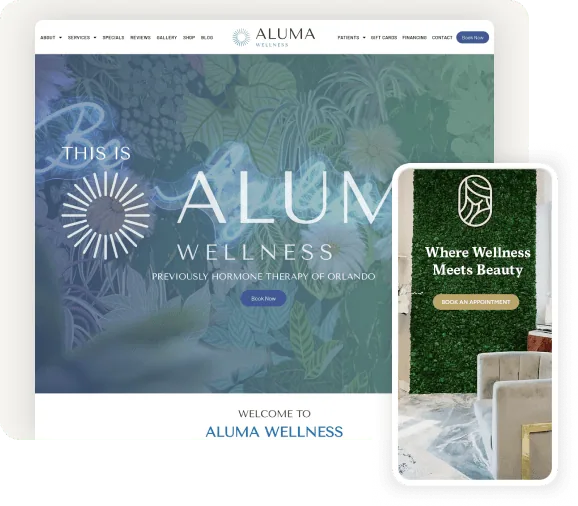
- Photography and imagery style. Consistent lighting, subject styling, tone. Stock imagery signals generic; custom photography signals genuine
- Iconography and graphic elements. Any supporting visual language (patterns, illustrations, textures) that reinforces the aesthetic
2. Verbal Identity
How the practice sounds. Includes:
- Brand voice. The consistent personality that comes through in copy — warm-and-expert, clinical-and-precise, luxurious-and-refined, approachable-and-friendly
- Tagline or positioning line. A short phrase that captures the practice’s differentiation
- Messaging pillars. 3-5 core themes the brand consistently reinforces
- Vocabulary standards. Words you use (and don’t use) — for example, “patients” vs “clients,” “treatment” vs “procedure,” “practice” vs “spa”
- Point of view. What the brand actively believes about aesthetics, patient care, and results
3. Positioning
The strategic choice of where the brand sits in the local market. Real positioning requires choosing what you are NOT, not just what you are. Options include:
- Provider-led positioning (built around a specific provider’s credentials and reputation)
- Service specialization (deep depth in one service category)
- Patient specialization (built around a specific patient segment)
- Experience specialization (differentiated by an operational or service model)
- Outcome specialization (built around a specific results definition)
Practices that try to be everything to everyone end up being distinctive to no one.
4. Experiential Identity
The physical and human expression of the brand. Every patient interaction reinforces or dilutes the brand:
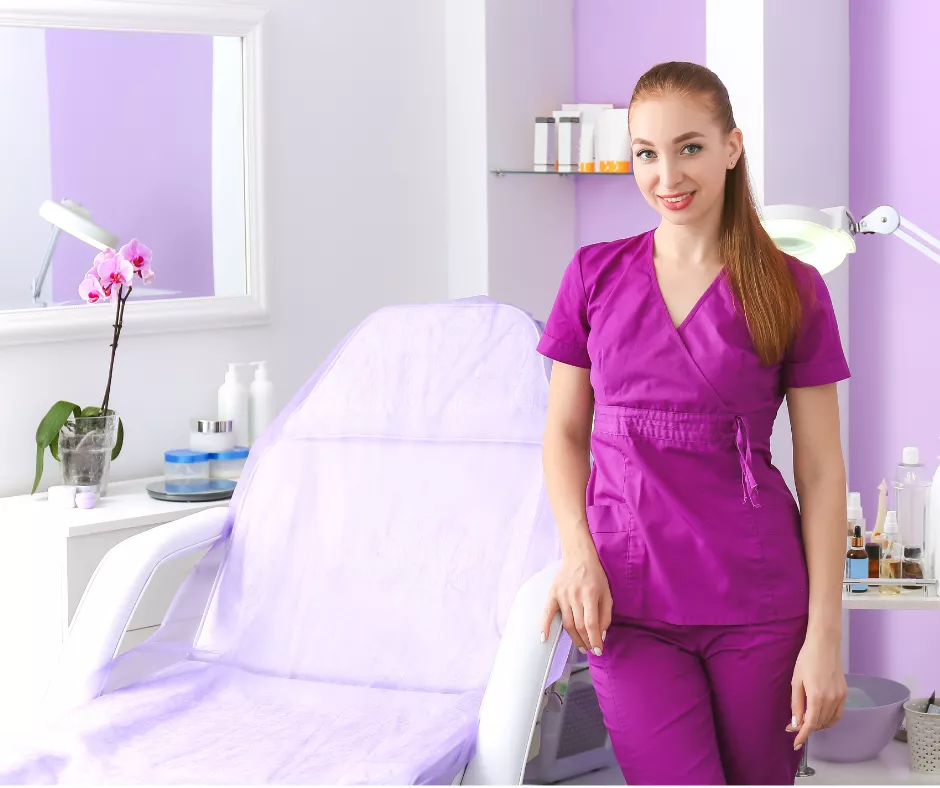
- In-practice environment. Waiting room, treatment rooms, staff attire, background music, lighting, scent
- Staff interactions. How the front desk answers the phone. What providers say in consultation. How follow-ups are worded
- Digital touchpoints. Booking flow, email tone, SMS reminder copy, patient portal design
- Post-treatment experience. Aftercare communication, follow-up cadence, review requests
The gap between what the brand promises and what the patient experiences is the single most common brand failure. A luxury visual identity paired with a chaotic front desk destroys the brand faster than a mediocre logo ever would.
How Strong Branding Impacts Practice Success
The business impact of a well-built brand shows up in four concrete places:
Premium pricing power. Consumers consistently pay more for brands they trust and perceive as premium. Aesthetic patients specifically will pay 20-40% premiums to a strongly-branded practice over a commodity competitor for the same clinical treatment. Every dollar of that premium falls to margin, not cost.
Higher retention and rebook rates. Patients who emotionally connect with a brand rebook at meaningfully higher rates than patients who purchased on price. Brand-loyal patients also refer at 2-3x the rate of transactional patients, producing the compounding word-of-mouth flywheel that separates growing practices from stagnant ones.
Better talent attraction and retention. Injectors, aestheticians, and providers actively choose employers based on brand reputation. A strong brand becomes a recruitment moat, attracting stronger clinical talent than a competitor practice could recruit at the same compensation.
Reduced marketing cost per acquired patient. Branded practices convert paid traffic at 2-3x the rate of unbranded ones because trust is pre-established. Every dollar spent on Google Ads works harder for a practice with 200 5-star Google reviews and a consistent brand than for a practice patients have never heard of.
Add these four effects together and strong branding produces a compounding financial advantage that widens each year.
→ Nail down your brand messaging in 15 minutes with Brand Sherpa
The Cost of Weak Branding
Weak brand isn’t just missed opportunity. It’s active drag on the practice.
Commoditization and price competition. When patients can’t tell your practice apart from three others, price becomes the deciding factor. Practices without brand differentiation compete on discounts, which crushes margins and attracts the least loyal patient segment.
Confused positioning and mixed messages. Fragmented branding across your website, social, in-practice signage, and staff scripts confuses prospective patients. Confused prospects don’t book; they keep researching.
Lower perceived value of clinical services. A well-branded practice can charge $650 for Botox treatment that a weakly-branded practice charges $450 for. Same treatment, same clinical outcome, same actual product. Brand is what closes the perceived-value gap.
Struggle to stand out in search. As covered above, fragmented brand identity now hurts SEO and AI answer engine visibility. Practices with weak brand find themselves invisible in the moments patients are researching.
Difficulty attracting quality talent. Providers won’t leave a respected practice to join a no-name one, regardless of compensation. Weak-brand practices end up with the talent that stronger-brand competitors passed on.
Building Your Med Spa Brand: A 5-Step Framework
Brand development follows a specific order. Practices that skip strategic foundation and jump straight to logo design almost always redo the work within 18 months. The correct order:
Step 1: Define Your Ideal Patient
Everything downstream depends on knowing who specifically you’re building the brand for. Not “women 30-65 who care about their appearance” — that’s a demographic, not a patient. Your ideal patient is a specific person: age range, income range, life stage, treatment preferences, decision journey, values, and pain points. The strategic planning framework covered in The 5-Step Medical Spa Marketing Plan walks through ICP development in depth.
Step 2: Identify Your Unique Value Proposition
Your UVP is the strategic answer to why a specific ideal patient should choose your practice over the alternatives available to them. The test: could a competitor honestly say the same UVP? If yes, it’s not sharp enough. Real UVPs pass the “so what?” test — they’re specific enough that a competitor couldn’t claim them without changing what they actually do.
Step 3: Conduct a Competitive Landscape Analysis
Systematically research the 5-10 practices your ideal patient would evaluate alongside yours. Document their visual identity, verbal positioning, service focus, pricing, review positioning, and social presence. The goal isn’t to copy anyone; it’s to identify the specific spaces they’ve collectively left uncovered, where your practice can genuinely own territory.
Step 4: Develop Visual and Verbal Identity
Only after the strategic foundation is set do you move to design work. Logo, color palette, typography, photography style, brand voice, messaging pillars, and tagline all get developed to express the strategic positioning. Practices that skip strategy and start here end up with beautiful design that doesn’t communicate anything specific.
Step 5: Codify in a Brand Style Guide
The style guide is the document that keeps every touchpoint consistent. Covers visual standards (logo usage rules, color specifications, typography hierarchy, photography guidelines), verbal standards (voice principles, do/don’t examples, vocabulary lists), and application rules (how the brand shows up in different contexts — website, social, print, in-practice). Without a style guide, brand consistency depends on individual memory and judgment, which fails at scale.
For practices at Step 2 (Unique Value Proposition development), Growth99’s Brand Sherpa is a free assessment tool that walks aesthetic practices through the strategic foundation in about 15 minutes and produces a working positioning statement.
Measuring Brand Success
Brand feels intangible, but it’s measurable. Track these four categories:
Brand awareness. Branded search volume (how often people search your practice name directly), Google Business Profile impressions for your name, direct website traffic (visitors who typed your URL directly). All should trend up as brand grows.
Brand perception. Patient sentiment in reviews (do reviewers describe your brand attributes back to you?), Net Promoter Score from patient surveys, brand attribute alignment (do patients describe your practice the way you position it?).
Brand strength. Referral rate (higher-brand practices see higher referral rates), rebook rate at 90 days, willingness-to-pay premium (are patients paying above local market rates without complaint?).
Brand-search coupling. Ranking for branded keywords (“your practice name + reviews,” “your practice name + Botox”), citation frequency in AI answer engine responses (newer metric, tracked with monitoring tools), and consistency scores across your Google Business Profile, review sites, and directory listings.
Review these metrics quarterly. Strong brands show consistent upward pressure across all four categories over 12-24 month periods.
Common Med Spa Branding Mistakes
Starting with the logo instead of the strategy. The logo is the last step, not the first. Practices that design the visual identity before defining ICP, UVP, and positioning always redo the logo within 18 months.
Trying to appeal to everyone. Broad brand appeals to no one specifically. Narrow first, expand later once your specific ICP is winning.
Inconsistent application across touchpoints. A luxury visual identity on the website paired with a Wix-template email newsletter destroys brand equity faster than any competitor could.
Treating brand as a one-time project. Brand is a permanent commitment, not a launch. Every marketing touchpoint, every patient interaction, every hire either strengthens or dilutes the brand.
Not documenting brand standards. Without a style guide, consistency depends on individual memory. Standards must be documented, distributed, and enforced.
Underinvesting in the strategic foundation. Practices that spend $500 on a logo and $0 on positioning strategy end up with a great logo attached to a directionless brand. Reverse the ratio.
FAQ: Med Spa Branding Questions Answered
What is med spa branding?
Med spa branding is the complete identity of an aesthetic practice — the visual elements (logo, colors, typography, imagery), the verbal elements (voice, messaging, tagline, unique value proposition), and the experiential elements (staff interactions, in-practice environment, digital touchpoints) — that together shape how prospective and existing patients perceive the practice. A strong brand makes an aesthetic practice recognizable, trusted, and worth premium pricing.
Why does branding matter for med spas?
Branding matters for med spas because aesthetic patients are choosing based on trust and perceived quality, not just price or convenience. A strong brand justifies premium pricing (patients pay more for brands they trust), drives loyalty (branded practices see higher rebook rates), attracts talent (professionals want to work for respected brands), and compounds over time (brand equity increases in value each year of consistent investment).
What makes a strong med spa brand?
A strong med spa brand has four elements working together: a distinct visual identity (logo, colors, typography, imagery), a clear brand voice and personality (how the practice sounds in writing and conversation), a specific positioning in the local market (what makes this practice different from every competitor), and consistency across every touchpoint (website, social, in-practice, staff interactions). All four elements must align to reinforce a single brand promise.
How do I start building a brand for my med spa?
Start with the strategic foundation before touching design. Define your ideal patient (who specifically are you serving), identify your unique value proposition (what makes your practice genuinely different from competitors), position your practice against local alternatives, then translate that strategy into visual and verbal identity. Tools like Growth99’s Brand Sherpa walk practices through this in 15 minutes.
How much should a med spa invest in branding?
Upfront brand development for a new or rebranding practice typically costs $5,000 to $50,000 depending on scope (strategy work, visual identity design, brand guide, applied assets, website integration). Ongoing brand maintenance is embedded in marketing execution — every ad, blog post, social post, and email either strengthens or dilutes the brand. Practices that treat every touchpoint as brand-building compound faster than practices that treat brand as a one-time project.
How does branding affect med spa SEO and AI search?
Brand consistency is a Google E-E-A-T signal (Experience, Expertise, Authoritativeness, Trustworthiness) — practices with consistent brand identity across their website, Google Business Profile, review sites, and social platforms rank higher for medical content than practices with fragmented identities. AI answer engines like ChatGPT, Google AI Overviews, and Perplexity increasingly cite branded, consistent sources over anonymous or inconsistent ones. In 2026, brand and search performance are more tightly coupled than ever.
Key Insights
Med spa branding in 2026 is no longer decorative. It’s structural. In a market of 10,000+ competing locations, brand is what makes your practice the obvious choice instead of a category commodity. In an AI-mediated patient research world, brand consistency is what earns citations. Under Google’s E-E-A-T standards, brand signals are ranking factors. And in every consultation room, brand is what makes patients willing to pay premium pricing without hesitation.
The practices that treat brand as a permanent commitment (documented, funded, enforced across every touchpoint) compound advantages every year. The practices that treat brand as a one-time logo project stay stuck competing on price.
For the strategic marketing planning framework that positions brand as one step of five, see The 5-Step Medical Spa Marketing Plan. For how brand shows up specifically through your content, see the med spa content marketing playbook. For the operational levers that compound alongside brand (retention, patient experience, financial discipline), see How to Grow Your Med Spa: 6 Levers Beyond Marketing.
You built your practice on clinical excellence. The work of building and maintaining a brand that commands premium positioning across visual, verbal, and experiential touchpoints — that’s specialized work. We bring the brand strategy expertise and execution team. You bring the clinical excellence. Together, that’s how a strong brand turns into compounding growth